


Greater Manchester Clean Air Plan
Cleaning up our air
Poor air quality can affect people's health.
That's why we’re working to make Greater Manchester a cleaner and healthier place to live in, work in and visit.
Through the transformational Bee Network we’re already cleaning up our air through investment in zero emission buses and active travel.
The investment-led Greater Manchester Clean Air Plan is further reducing air pollution on local roads through a multi-million-pound investment in cleaner buses, taxis and targeted traffic measures.
We’re doing this with no charging-Clean Air Zone that could cause hardship to local residents or businesses.
There are no clean air charges to drive anywhere in Greater Manchester. Instead, millions more journeys are being made on the sustainable Bee Network.
Read the latest report to the GMCA Air Quality Administration Committee (3 August 2026).

The investment-led Clean Air Plan
Greater Manchester is under direction from government to meet legal limits for nitrogen dioxide on local roads in the shortest possible time and by 2026.
In 2025 government approved the investment-led, non-charging Greater Manchester Clean Air Plan approach as the best route to meeting legal limits.
Previously, government had directed Greater Manchester to achieve this through a Greater Manchester-wide charging Clean Air Zone.
But after the Covid-19 pandemic, evidence showed that the charging Clean Air Zone would unfairly impact residents and businesses – without meeting legal limits for air quality in the shortest possible time.
Government is meeting all the costs of removing Clean Air Zone signs on the local road network. With public backing, the cameras installed to enforce the Clean Air Zone have been transferred to Greater Manchester Police to help detect crime.
Through the fully government-funded Clean Air Plan we are successfully reducing air pollution:
£51.1 million Clean Bus Fund: Funding 78 zero emission buses on routes where they are most needed to bring nitrogen dioxide within legal limits, and support bus depot electrification in Manchester and Bolton.
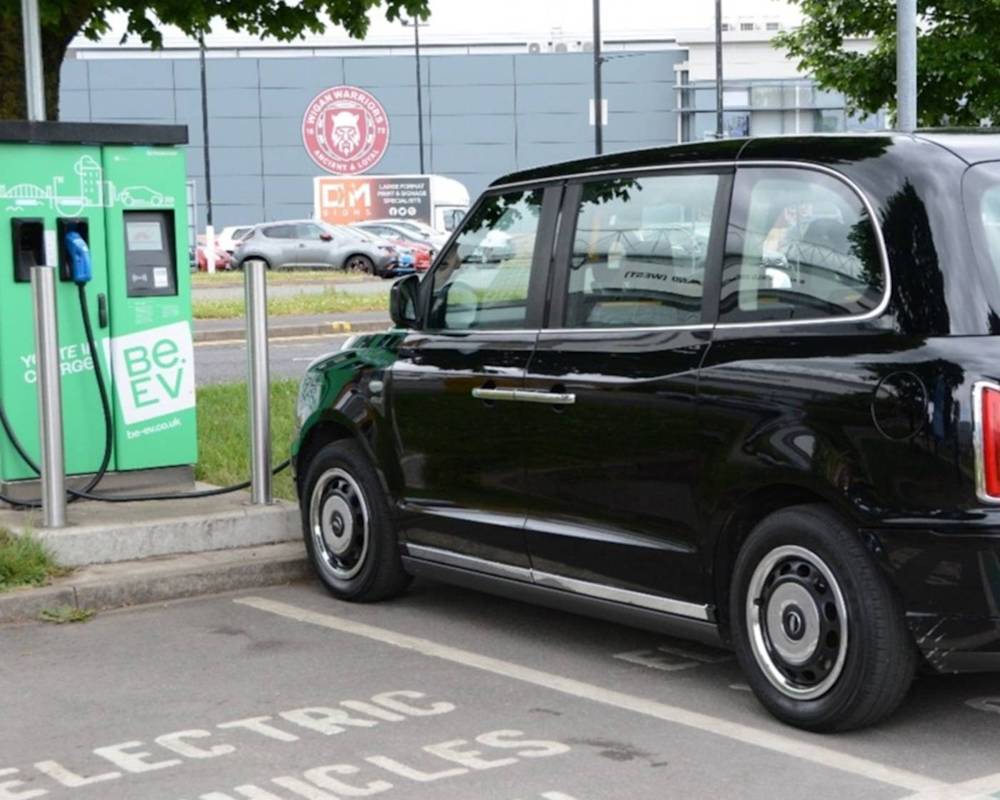
£8 million Hackney Support Fund: Supporting Greater Manchester’s hackney (black cab) fleet to move to cleaner vehicles.
Working with Manchester and Salford City Councils, we have also introduced measures to manage traffic flows in the regional centre and bring nitrogen dioxide within legal limits on Regent Road and Quay Street.
Greater Manchester will keep monitoring and reporting on the Clean Air Plan’s effectiveness until nitrogen dioxide (NO₂) on local roads meet legal limits. After that, monitoring will continue to make sure we stay within those limits over time.
Check back for updates or sign up to our newsletter.
Cleaning up our air through the Bee Network
Greater Manchester is working to create the UK’s first fully joined up, clean transport network with zero emissions from vehicles by 2030: the Bee Network.
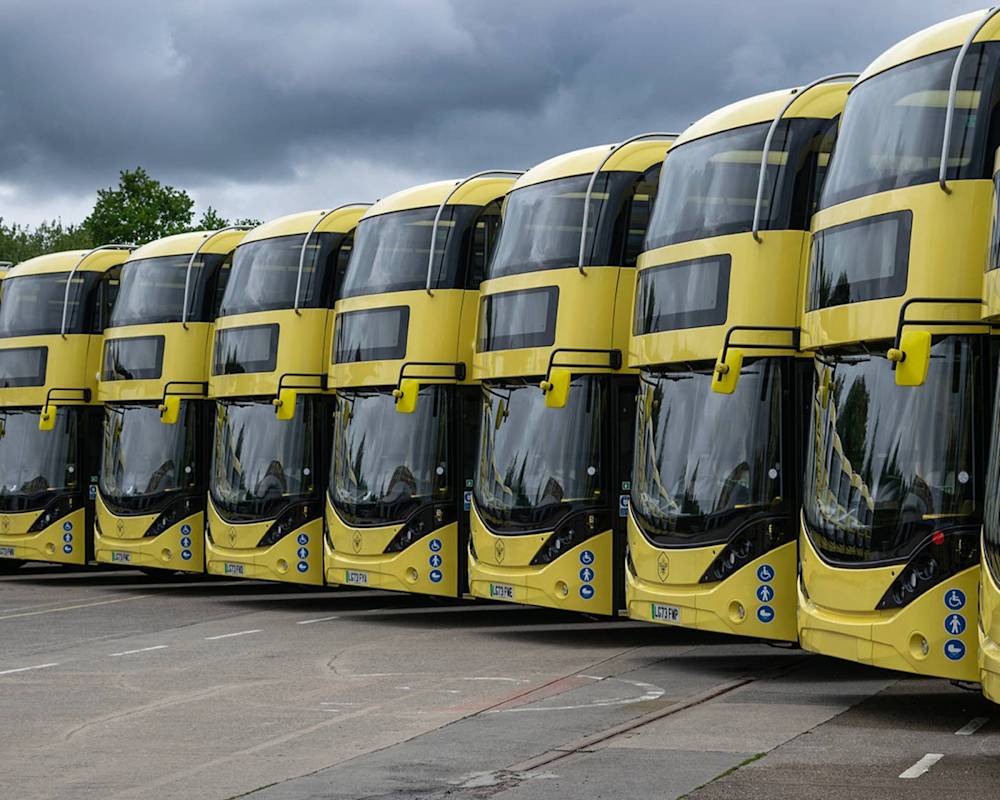
Since taking back control of local buses through the Bee Network, we have been able to run clean and zero emission buses on routes where they are most needed to improve air quality.
One in five buses are now electric and three quarters are less than four years old.
78 Clean Air Plan-funded zero emission buses. 48 are now running from Bolton, including the 8,10, V1 and V2 bus services.
Bus depots are being electrified at pace, with all-electric depots at Ashton and Middleton, and upgrades at Bolton, Oldham and Hyde Road depots in Manchester.
New Clean Air Plan-funded chargers have been installed on Piccadilly approach so that more electric buses can run on the free bus service.
A further £2.5 billion government transport funding has also been announced for Greater Manchester, part of which will fund a thousand new buses to form a 100% electric fleet by 2030.
As a result, millions more sustainable journeys are being made on affordable, safe, greener and more reliable services.
The latest air quality monitoring data for 2025 shows that this investment in cleaner buses is helping to improve local air quality.
Your questions answered
The Greater Manchester Clean Air Plan is underpinned by local data and air quality modelling (the process of forecasting, understanding and managing future levels of air pollution).
We have worked closely with the government’s Joint Air Quality Unit to help guide us in developing measures that will meet legal limits for nitrogen dioxide on local roads in 2026.
The measures have also been shaped by targeted engagement and research with key impacted groups and representatives, including:
Working with vehicle-owning groups, such as the taxi trade.
Input from business, community organisations and equality-based groups.
This approach ensures the plan is evidence-led, informed by those affected, and focused on delivering legal air quality limits.
In March 2020, the government directed Greater Manchester to:
Implement a city‑region wide Category C charging Clean Air Zone.
Apply daily charges to some older, more polluting vehicles, including buses, taxis, vans and heavy goods vehicles, but not private cars.
The direction was based on the government’s framework, evidence and criteria available at the time, which identified that a charging Clean Air Zone was expected to be the fastest measure to meet the government direction to reduce roadside pollution. From the outset, Greater Manchester made clear that any charging Clean Air Zone would only be fair and workable if backed by enough national funding to help businesses, drivers and operators upgrade to cleaner vehicles and avoid charges. However, the situation changed significantly following the COVID‑19 pandemic:
Economic conditions worsened.
Vehicle costs increased, with supply shortages.
This made it harder for people to switch to cleaner vehicles.
Updated evidence submitted to government by Greater Manchester showed that the plan for a charging Clean Air Zone would therefore:
Be unworkable in practice.
Not achieve compliance with legal nitrogen dioxide (NO₂) limits by 2024.
Cause financial hardship for residents and businesses.
In February 2022, the government withdrew the original direction and allowed Greater Manchester to take a different approach. Greater Manchester is now rolling out an investment-led plan, focused on cleaner vehicles and targeted local measures, which is approved by government to meet legal limits for nitrogen dioxide in the shortest possible time and by 2026.
The investment-led Clean Air Plan will improve air quality faster because evidence shows it is the only approach that will meet legal nitrogen dioxide (NO₂) limits by 2026, based on current conditions. Since the pandemic, the situation has changed significantly:
There are now far fewer locations where NO₂ exceeds legal limits.
Earlier investment in the Bee Network, including cleaner buses and heavy goods vehicles, has already improved air quality.
The remaining issues are concentrated mainly in the regional centre.
Greater Manchester was required by government to compare options, including a Clean Air Zone in the regional centre (covering Manchester city centre and parts of Salford). Modelling showed that only the non‑charging, investment-led approach would achieve compliance by 2026. The plan focuses on targeted measures to reduce emissions at source, including:
Zero emission buses and cleaner taxis.
Targeted road improvements to reduce congestion and pollution.
As a result, Greater Manchester is now on track to meet legal air quality limits by the end of 2026, with air quality continuing to improve through sustained investment in the transport network.
Different areas need different solutions to improve air quality. In Greater Manchester, our evidence showed that investing in cleaner buses, taxis and targeted local road measures can meet legal limits in the shortest possible time.
Because this approach is approved by government, a charging Clean Air Zone or Ultra Low Emission Zone is not needed.
Greater Manchester has already made significant progress towards meeting legal limits for nitrogen dioxide (NO₂), with monitored levels in 2025 falling compared to 2024 and much lower than before the pandemic in 2019.
In 2019, there were 129 locations that exceeded legal NO₂ limits:
This fell to 38 sites in 2024
And further reduced to 11 sites in 2025
This improvement reflects a steady, long-term reduction in pollution across the city region. The progress has been supported by:
Investment in the Bee Network, including cleaner buses
People switching to cleaner vehicles
Early Clean Air Plan funding to support lower-emission transport
You can view the full results on the Clean Air GM Data Hub.
Greater Manchester will bring all remaining areas where nitrogen dioxide exceeds legal limits into compliance by 2026 through continued bus improvements and road traffic measures.
This includes measures to reduce stop-start traffic, as stationary or slow‑moving vehicles produce higher levels of pollution.
Key actions include:
Introducing AI‑enabled traffic signals that adjust in real time based on traffic conditions.
Using live data to predict traffic patterns and optimise signal timings.
This helps to keep traffic moving, reduce congestion and cut pollution from idling vehicles. A plan is in place to monitor, evaluate and review the Clean Air Plan’s performance.
With Clean Air Plan funding from government, we have worked with Manchester and Salford City Councils to manage traffic flow on roads in Manchester and Salford and bring nitrogen dioxide within legal limits on Regent Road and Quay Street, including:
Signal timing adjustments at A57 Regent Road and adjacent parallel routes to improve the flow of traffic, reduce congestion and emissions.
Reducing the speed limit on A57 Regent Road from 40mph to 30mph to improve the flow of traffic, reducing emissions from drivers speeding up and slowing down.
Yellow box enforcement along the A57 Regent Road corridor and the A34 Quay Street to improve the flow of traffic, reduce congestion and emissions.
The Clean Air Zone signs and Automatic Number Plate Recognition (ANPR) cameras installed for the formerly planned Clean Air Zone and associated costs have been fully funded by government.
As Greater Manchester will not now have a Clean Air Zone:
The ten Greater Manchester local authorities have now removed all signs on the local road network, with funding from the government’s Joint Air Quality Unit.
National Highways has also removed the signs on the Strategic Road Network.
Greater Manchester Police (GMP) has taken ownership of the ANPR cameras (funded through their budget) to bring them into their existing ANPR network, to support crime detection and prevention. This follows overwhelming backing for the move during a six-week consultation, with nearly 90% of respondents in favour.
GMP will share ANPR camera data with TfGM to support transport planning and to monitor the efficiency of the Clean Air Plan.
Upgrading Greater Manchester's taxi fleet
The £8 million government-funded Hackney Support Fund is providing grants of up to £12,560 to help the black cab trade to move to cleaner vehicles, linked to local emissions standards.
The £2 million Private Hire Vehicle (PHV) Support Fund is now live. The fund supports PHV owners licensed with a Greater Manchester local authority to upgrade to cleaner, low emission vehicles.
Backing our taxis: Local. Licensed. Trusted.
In April 2025, Greater Manchester leaders launched the ‘Backing our taxis: Local. Licensed. Trusted’ campaign – calling on government to support the city region’s taxis and tackle the problem of ‘out of area’ licensing.
As part of this, a review of taxi licensing in Greater Manchester found that the national system needs reforms to benefit the taxi trade, local authorities, and the travelling public.
Over 5,200 licensees, trade bodies, and local authority officers engaged with the review, which found that there is a strong appetite for positive change.
Read the report outlining feedback from the taxi trade and recommendations.
What can I do to help reduce air pollution?
Are you contributing to air pollution? There are plenty of ways we can all help reduce air pollution. The single biggest thing we can all do is drive less, where possible.
See our suggestions for more simple changes you can make to reduce and avoid air pollution.
Changes you can make
Sign up for updates
Keep up to date with the latest Clean Air Plan news.
Transport for Greater Manchester (TfGM) is the Data Controller of personal information provided in this form.
Technical documents, reports and FAQs
Need more help?
If you have any questions about the Clean Air Plan, our team will be happy to help you.